
Sewer backup help now
Sewer Line Backup Repair in San Francisco
A sewer backup needs fast attention, careful clearing, and honest next steps. Call us.
Sewer backup help now
A sewer backup needs fast attention, careful clearing, and honest next steps. Call us.
A sewer line backup is one of the most stressful plumbing problems a property can face. Wastewater coming up through tubs, showers, toilets, floor drains, or basement areas is a health hazard as well as a plumbing failure. Emergency Plumber SF responds with the equipment and experience to clear the immediate restriction, and the honesty to tell you what's actually causing it.
In San Francisco, sewer trouble often traces back to older clay or cast-iron lines, root intrusion, heavy buildup, improper materials from past repairs, damaged pipe sections, or city-side conditions. We work the private plumbing system first, show you what we find, and tell you plainly whether further inspection is worth the money.
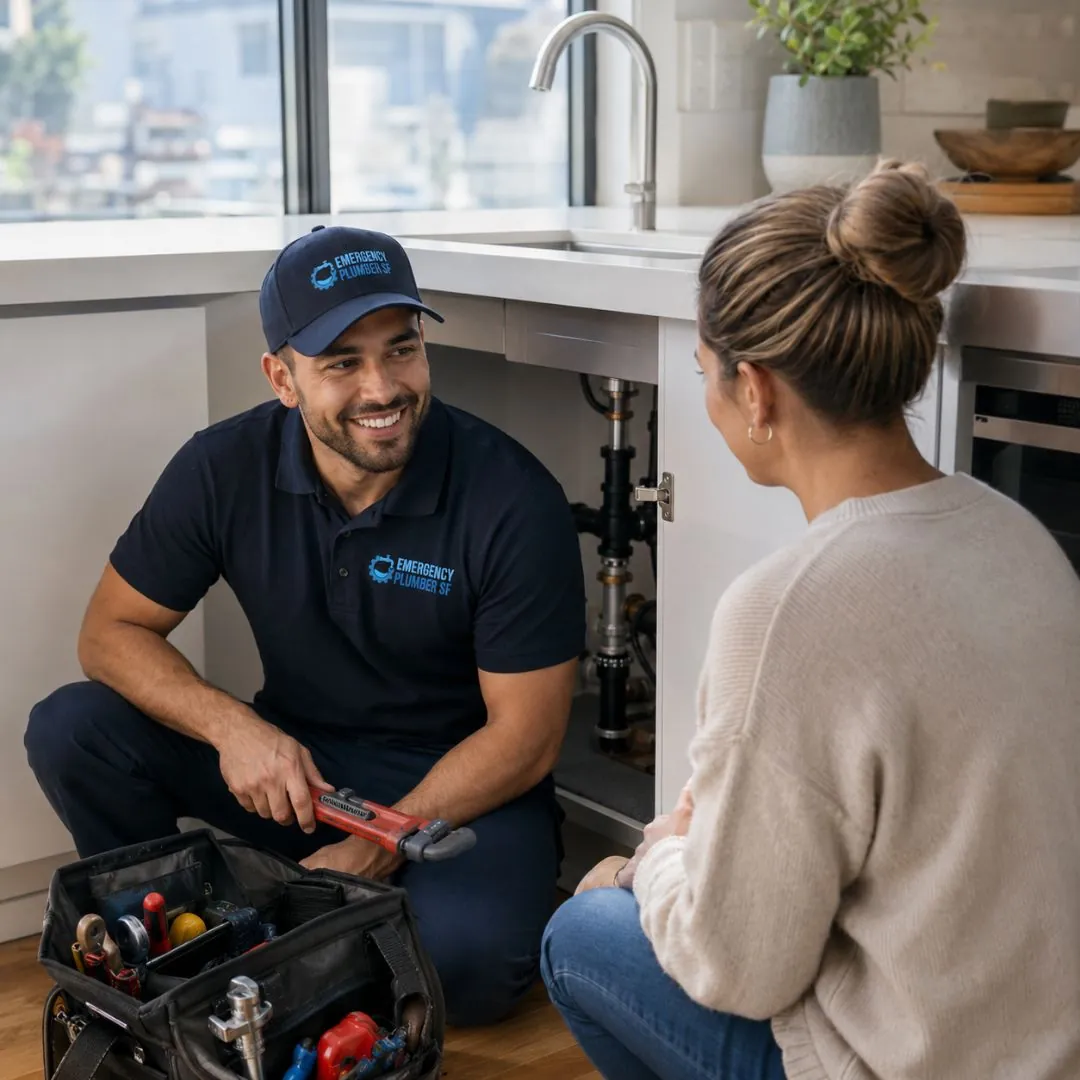
A single slow sink usually means a local drain problem. But multiple fixtures backing up at once, gurgling toilets, wastewater rising in a tub, or floor drain overflow point to a sewer line issue that should be addressed quickly, before it reaches finished spaces.
We access the line through an available cleanout or appropriate fixture point and clear the obstruction to restore flow.
If backups keep returning, we look for the warning signs of roots, sagging pipe, heavy buildup, or structural damage: the things a quick clearing can't fix.
When it's warranted, we recommend a camera inspection to see the line directly and confirm the source of the recurring problem. You see the footage too.
Sewer water is unsafe. We work carefully around affected areas and explain cleanup and disinfection considerations once the plumbing is controlled.
Restaurants, shops, and offices need fast sewer response to limit downtime, protect health inspections, and keep doors open.
Before you approve any lateral work, establish which section of pipe has failed. In San Francisco that single fact decides whether you pay for it at all.
Your sewer lateral runs from the building out to the city main. In San Francisco the property owner owns the whole thing, but responsibility for repairs splits at the curb. The upper lateral, from the building to the face of the curb, including the vent and the trap, is yours to repair using a licensed contractor. The lower lateral, from the curb out to the main in the street, is under most circumstances repaired by the SFPUC at no extra cost to you, after you report it through 311 so their sewer operations team can inspect.
That means the camera inspection is not just diagnostic, it is financial. Locating the defect relative to the curb line determines who pays. Anyone recommending a full lateral replacement without showing you where the fault sits should be asked that question directly.
The most common cause in older districts. Roots find a separated clay joint and fill the pipe. Cabling buys a season; repairing the defect ends it.
Ground movement creates a low spot where waste collects instead of flowing. No amount of clearing fixes a belly, which is why it recurs on a schedule.
Cast iron scales internally and eventually cracks. Clay cracks and shears. Both end in the same place: a section that needs replacing rather than clearing.
Excavating the line to replace it. Necessary where the pipe has collapsed or alignment has shifted. Slower, more disruptive, and includes surface restoration.
Lining or pipe bursting through existing access, with far less excavation. Costs more per foot but often less overall once restoration is counted.
Fitted to stop main-line backups entering the building through low fixtures. The SFPUC treats these as the owner's responsibility and runs a reimbursement programme for eligible properties.
One more thing that catches people moving across the bay. The East Bay operates a completely different system: the EBMUD Regional Private Sewer Lateral Program requires a compliance certificate when a property is sold, when a remodel exceeds $100,000, or when the water meter size changes. Certificates last seven years after a repair or twenty after a full replacement. Oakland and Alameda are in that programme; Berkeley runs its own separate one. If you are selling in the East Bay, this is on the critical path to closing escrow, not an afterthought.
| Service | Typical Range | Average |
|---|---|---|
| Main sewer line clearing | $350–$1,200 | $700 |
| Sewer camera inspection | $250–$650 | $450 |
| Heavy blockage clearing | $700–$2,000+ | $1,150 |
| Sewer repair or replacement | Varies by scope | Inspection needed |
Costs depend on cleanout access, blockage severity, line length, and root intrusion. Repairs are only quoted after we've actually seen the line, never sight-unseen.
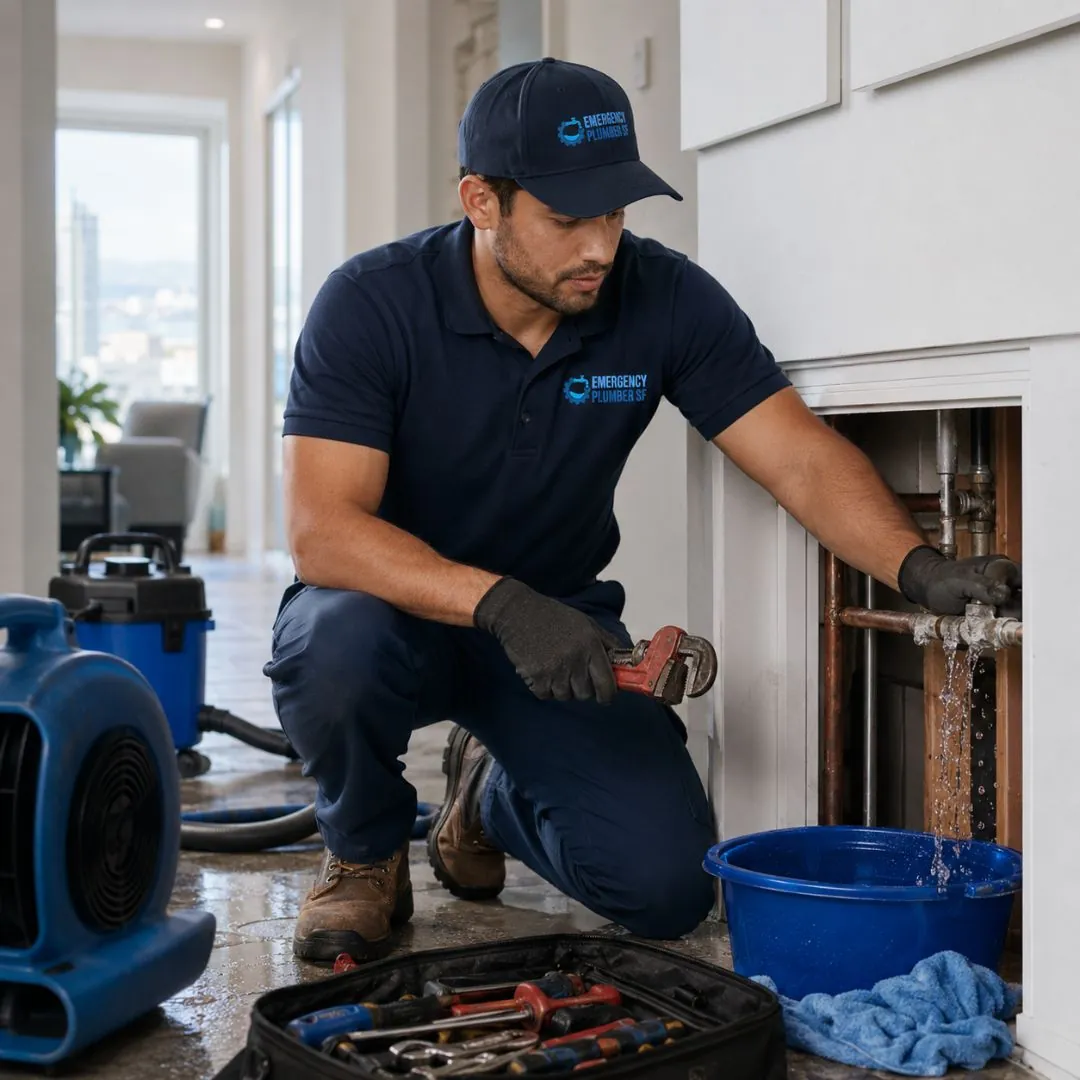
Sewer backups create health and property risks, so we treat them as top-priority calls.
Our team knows the difference between a local clog and a deeper sewer line restriction, and won't sell you the expensive fix when the simple one works.
We explain whether the backup looks temporary, recurring, or tied to pipe condition, with evidence you can see.
If the line needs camera work, repair, or coordination with the city, we explain the reasoning plainly and put it in writing.
By where it sits relative to the curb. A camera inspection locates the defect precisely. If it is in the upper lateral, between the building and the face of the curb, it is yours to repair. If it is in the lower lateral, out toward the main, report it through 311 so the SFPUC can inspect, because under most circumstances they carry out that work. Insist on seeing the footage and the locate.
Root intrusion through separated clay joints is the leading cause in the older districts. After that: bellies where settlement has created a low spot, scale in old cast iron, and grease accumulation. Backups cluster in the wet months because heavy rain loads the system and a compromised lateral is what fails first.
Trenchless lining or pipe bursting works where the existing line is intact enough to host the new pipe and the alignment is sound. It costs more per foot but avoids most of the excavation and surface restoration, which frequently makes it cheaper overall in a city of paved front gardens and narrow lots. Open trench is necessary where the pipe has collapsed or shifted.
Trenchless work is often one to two days on site. Open trench replacement typically runs two to five days depending on length, depth, and what is above it. Permitting adds time before the work: anything past the trap toward the street needs a side sewer permit from San Francisco Public Works, and 811 must be called at least 72 hours before excavation.
A valve fitted to the lateral that closes automatically when water flows toward the property, stopping a main-line backup from coming up through your lowest fixtures. It matters most for ground-floor and below-street units. The SFPUC treats these as the owner's responsibility and operates a reimbursement programme for properties that have experienced backup during heavy rain.
Substantially. The East Bay runs the EBMUD Regional Private Sewer Lateral Program, which requires a compliance certificate when selling, when remodelling above $100,000, or when changing water meter size. Oakland and Alameda are covered by it; Berkeley operates its own separate programme. None of this applies in San Francisco, which has its own arrangement entirely.
A spot repair on an accessible section might be $4,000 to $8,000. A full upper lateral replacement commonly runs $10,000 to $20,000 or more in San Francisco once permits, excavation, and surface restoration are counted. Trenchless is higher per foot but often lower in total. Get the camera footage before accepting any figure in that range.
The lateral itself is generally excluded as maintenance, but resulting damage inside the building may be covered, and some policies offer a specific sewer backup endorsement. Check whether you carry that endorsement before you need it, because it is inexpensive and is not included by default on most standard policies.
For sewer line backup repair, call Emergency Plumber SF before the problem spreads.
Quick, simple, and no obligation
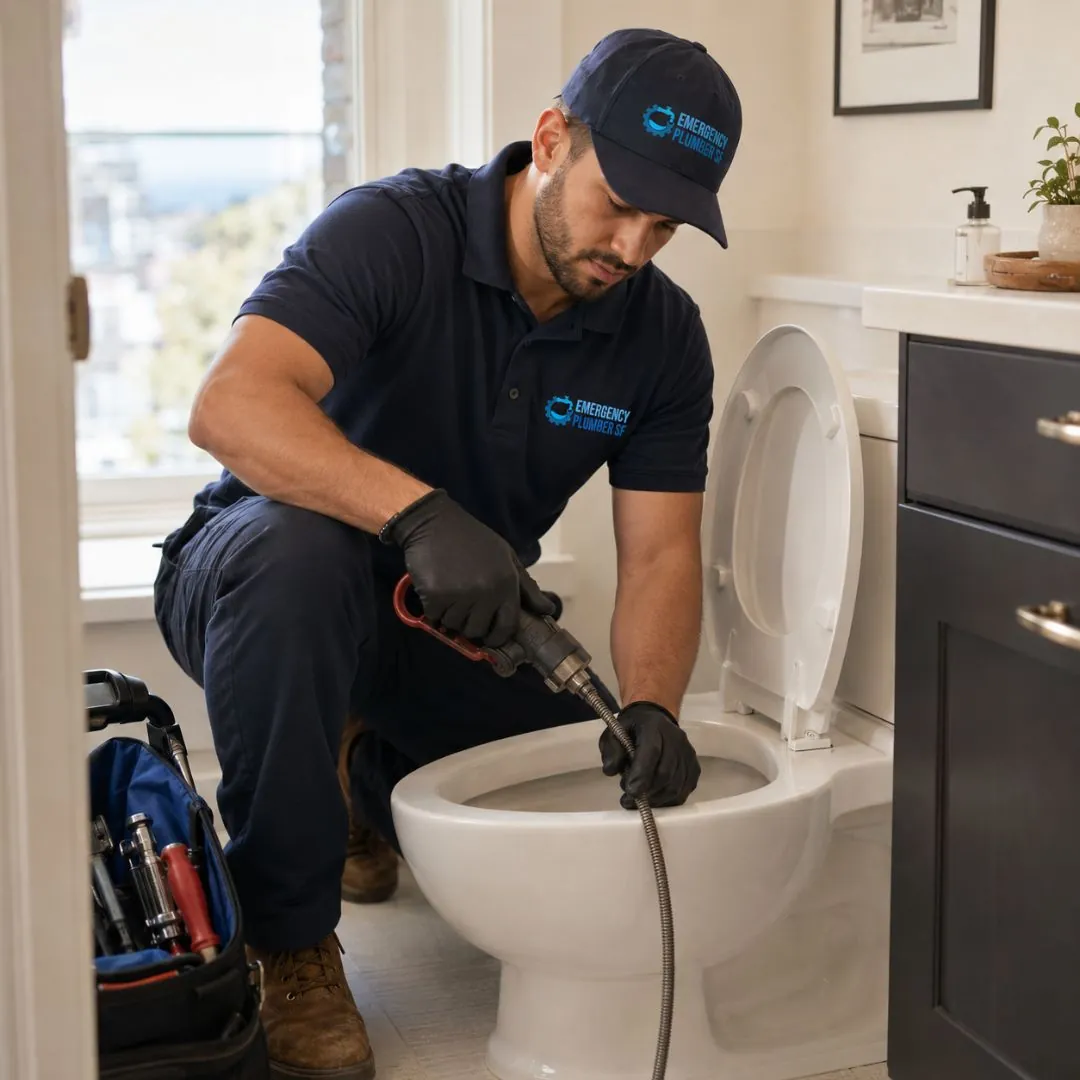
We check which fixtures are affected and whether wastewater is rising through low points.
The technician locates a cleanout or safe access point for clearing the sewer line.
We use the appropriate equipment to restore flow and watch how the line responds.
If the backup is likely to return, we recommend inspection or repair options, with pricing, so you can decide.