
Stop pipe damage fast
Burst Pipe Repair in San Francisco
When a pipe breaks, minutes matter. Call us and we'll help you stop the water before we even arrive.
Stop pipe damage fast
When a pipe breaks, minutes matter. Call us and we'll help you stop the water before we even arrive.
A burst pipe can turn a normal day into a property emergency within minutes, with water running through floors, cabinets, walls, ceilings, or shared building spaces. Emergency Plumber SF responds to burst pipe calls with one clear goal: stop the water, identify the failed section, and complete a repair that lasts.
Pipes burst for real, findable reasons: corrosion in old galvanized lines, pressure spikes, freezing exposure in vulnerable spots, accidental damage, failed fittings, or movement in aging plumbing. We work carefully in homes, apartments, restaurants, offices, and multi-unit buildings where access is tight and water damage spreads fast.
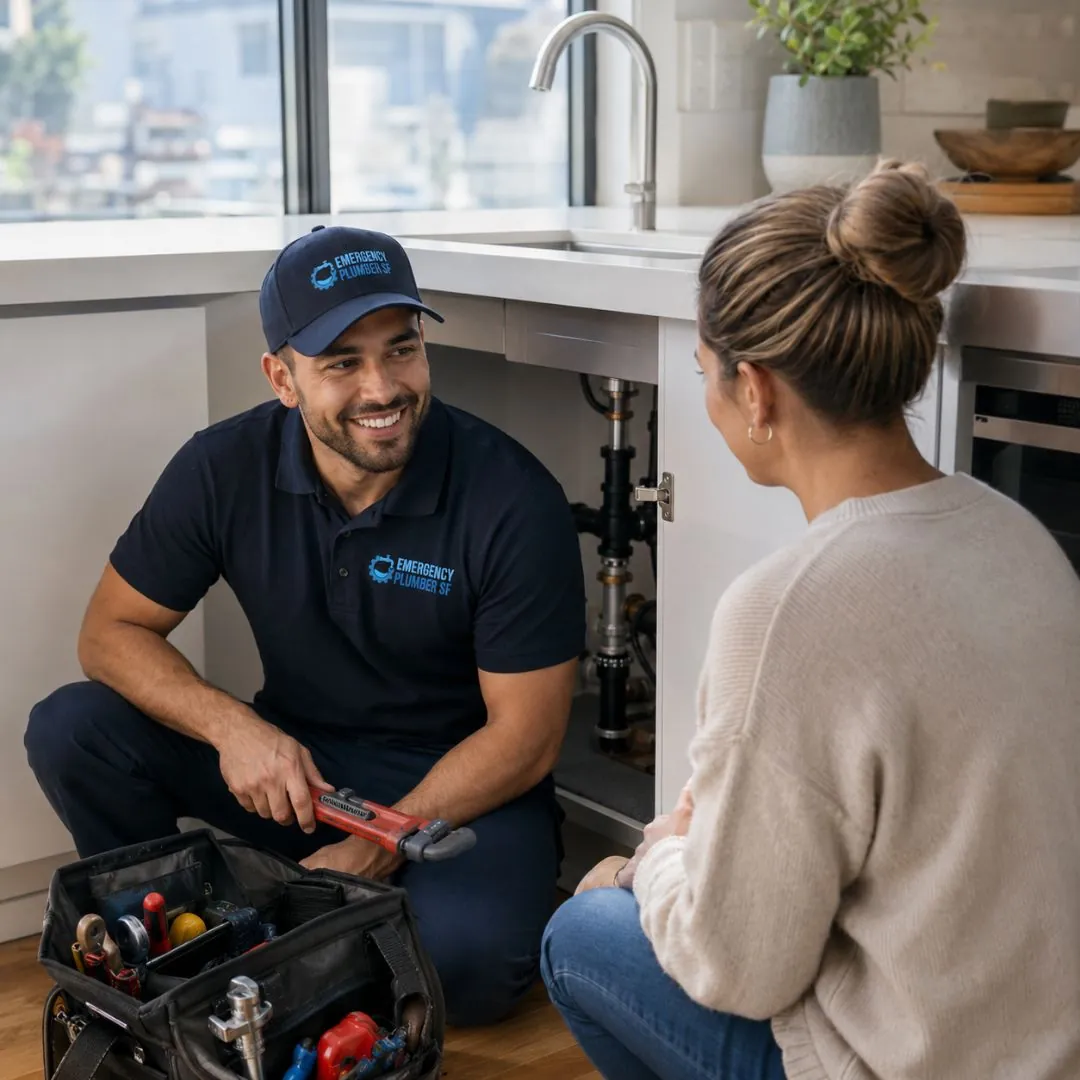
The right burst pipe repair starts with control. We help you locate shutoff valves, often over the phone before we arrive, then inspect the damaged section and recommend a spot repair, section replacement, or larger fix based on what we actually find.
We identify the affected line, fixture stop, branch valve, or main shutoff so water can be controlled as quickly as possible, starting on the phone.
When damage is limited, we remove the failed section and install a repair using materials matched to the existing system.
Some burst pipes hide behind finishes. We use careful inspection and targeted access to keep demolition and disruption to a minimum.
After the repair, we check for conditions that contributed to the failure, such as excess pressure, corrosion, or weakened fittings, so it doesn't happen again.
In apartments and condos, we communicate clearly about shutoffs, access, and affected neighboring units.
San Francisco almost never freezes, so the causes are different from most of the country and the failure pattern is different too.
Elsewhere, burst pipes are a winter story: water freezes, expands, and splits the line. Here the cause is nearly always corrosion, and corrosion fails gradually rather than suddenly. That distinction matters because it changes what you should do after the repair.
A very large share of this city's housing was built in the decades after 1906 with galvanized steel supply lines. Galvanized corrodes from the inside out. The zinc coating wears away, the steel beneath rusts, the internal diameter narrows, and eventually the wall thins enough to perforate. What you get is a pinhole rather than a split: a fine spray inside a wall cavity that can run for weeks before a stain appears. By the time you see it, the surrounding material has usually been wet for a long time.
The dominant cause in pre-war buildings. Pinholes rather than splits, developing over decades, and the first one is a signal about the rest of the system.
Copper fails too, usually from water chemistry, high velocity at bends, or poor workmanship at joints. Less common than galvanized but not rare.
Excessive incoming pressure, or shock when a valve closes fast, stresses joints repeatedly. A pressure regulator is often the actual fix.
Settlement and seismic events put stress on rigid pipework, particularly at fixed points and where lines pass through framing.
Not a pipe as such, but a braided washing machine hose failing at mains pressure floods a floor as thoroughly as anything. They have a service life.
Dissimilar metals joined without a dielectric fitting corrode at the junction. A repair done badly in 1998 is a failure waiting in 2026.
The strategic question after a galvanized pinhole is repair or repipe. A spot repair is cheap and fast and gets the water back on. But the rest of that pipework is the same age, carrying the same water, corroding at the same rate, so a first pinhole is usually the start of a sequence. Three spot repairs over two years cost more than a planned repipe and come with three sets of opened walls. If your building still has original galvanized supply, budget for the repipe rather than waiting to be forced into it.
| Service | Typical Range | Average |
|---|---|---|
| Emergency pipe inspection | $125–$350 | $225 |
| Small exposed pipe repair | $300–$850 | $525 |
| Hidden pipe repair with access | $750–$2,500+ | $1,350 |
| Larger section replacement | $1,200–$5,000+ | $2,600 |
Ranges reflect typical local jobs. Costs vary with pipe material, wall access, building type, after-hours timing, and the extent of water damage. We confirm pricing before starting.
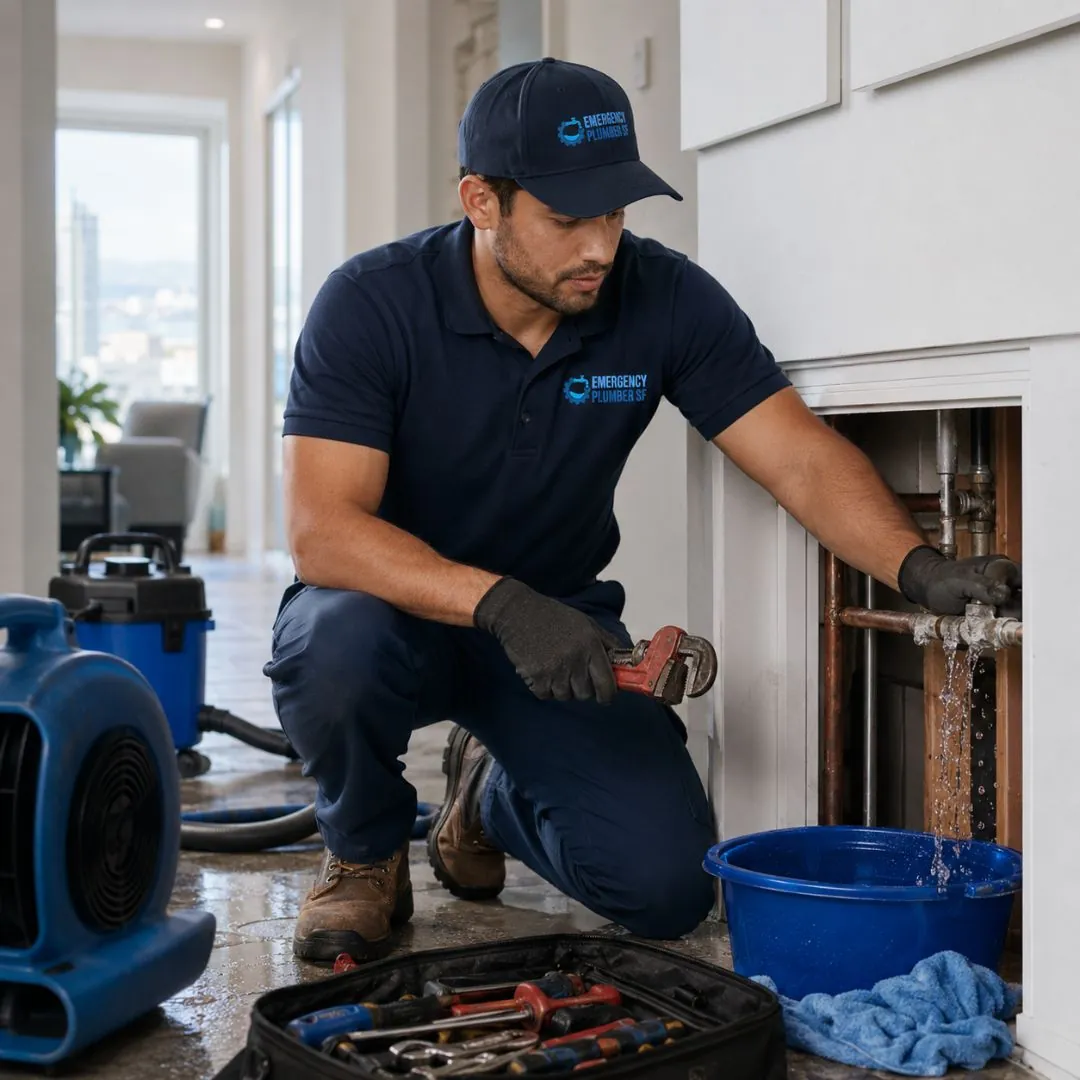
We focus on stopping active water before discussing anything else. Repairs come after the flooding stops.
San Francisco buildings often mix plumbing materials from several eras, and we know how to evaluate and repair aging systems.
We explain whether a spot repair is reasonable or whether a longer section should be replaced, and what each costs.
We keep the work area organized and tell you exactly what should happen next if drying or restoration is needed.
Because the cause is corrosion, not ice. Galvanized steel supply lines from the post-1906 building boom corrode internally over decades until the wall thins enough to perforate. The result is a pinhole leak rather than a dramatic split, often spraying inside a wall for weeks before anything shows. Copper fails too, usually from water chemistry or high velocity at bends.
If the pipework is original galvanized, a first pinhole is rarely the last. The rest is the same age and corroding at the same rate, so spot repairs tend to become a sequence, each with its own opened wall and call-out fee. Repair to get water back on, then get a repipe quote and plan it rather than waiting for the third failure.
An accessible section in an open basement or a garage can often be done in one to three hours. A pipe inside a finished wall takes longer because access has to be cut, the repair made, and the section pressure tested before anything closes. Half a day is realistic for in-wall work, more if several fixtures are affected.
Opening the wall is usually unavoidable for concealed pipework. Standard practice in this trade is to make the plumbing repair and leave the opening clean and square, with drywall, texture, and paint handled separately. Confirm that split before work starts, because assuming the finish work is included is a very common source of dispute.
Sudden and accidental failures are commonly covered, including the resulting water damage, though the pipe itself sometimes is not. Gradual seepage and damage from a leak that went unaddressed are usually excluded. Photograph everything before any work starts and keep the removed section of pipe, because it is evidence about whether the failure was sudden.
Copper is rigid, long-lived, and the traditional choice, with higher material and labour costs. PEX is flexible, faster to install with fewer joints, and generally cheaper, which matters in a building where every run means opening a wall. Both are code-compliant. Ask which your contractor proposes and why for your specific building.
Supply lines are pressurised, so a failure sprays or runs continuously whether or not anyone is using water. Drains only leak when something upstream is running, so the water appears after a shower or when a sink empties. Shutting the main tells you quickly: if it stops, it is supply; if it continues when a fixture is used, it is drainage.
A tiny perforation releasing a fine spray or steady weep, usually inside a wall or under a floor. It is worse than an obvious burst for one reason: nobody finds it. A burst gets fixed within the hour. A pinhole holds the surrounding material at exactly the moisture level that supports rot and mould for weeks, so the damage is often far more expensive than the repair.
For burst pipe repair in San Francisco and nearby areas, call Emergency Plumber SF now.
Quick, simple, and no obligation
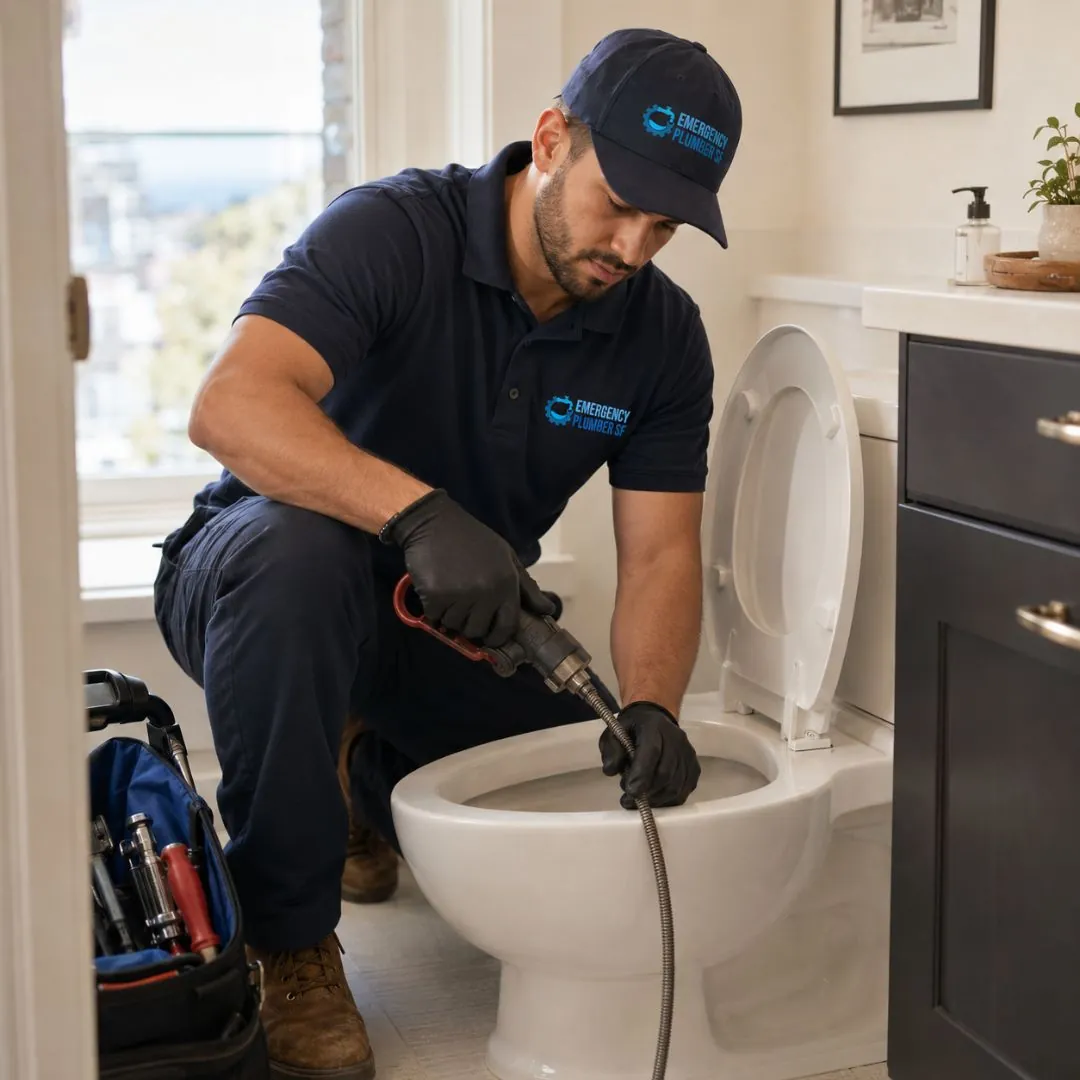
We identify and close the right shutoff, or guide you by phone before we arrive.
The technician inspects the pipe, surrounding materials, pressure signs, and nearby connections.
We remove the damaged portion, install the repair, and restore service when it's safe.
We pressure-test the repair, check for additional leaks, and explain any follow-up recommendations.