
Clear slow drains for good
Drain Cleaning Service in San Francisco
From slow drains to sudden backups, we restore flow and find out why it happened.
Clear slow drains for good
From slow drains to sudden backups, we restore flow and find out why it happened.
A clogged drain can be a small annoyance or an urgent plumbing problem depending on where the blockage sits. A slow bathroom sink may need a simple clearing, while a backing-up tub or floor drain often points to a deeper line issue. Emergency Plumber SF provides drain cleaning for homes and businesses across San Francisco, and we tell you which situation you're in.
We handle kitchen sink clogs, shower and tub stoppages, bathroom sinks, toilets, laundry drains, floor drains, and main line concerns. Our goal is to clear the blockage, test the drain, and tell you honestly whether the problem is isolated or likely to come back.
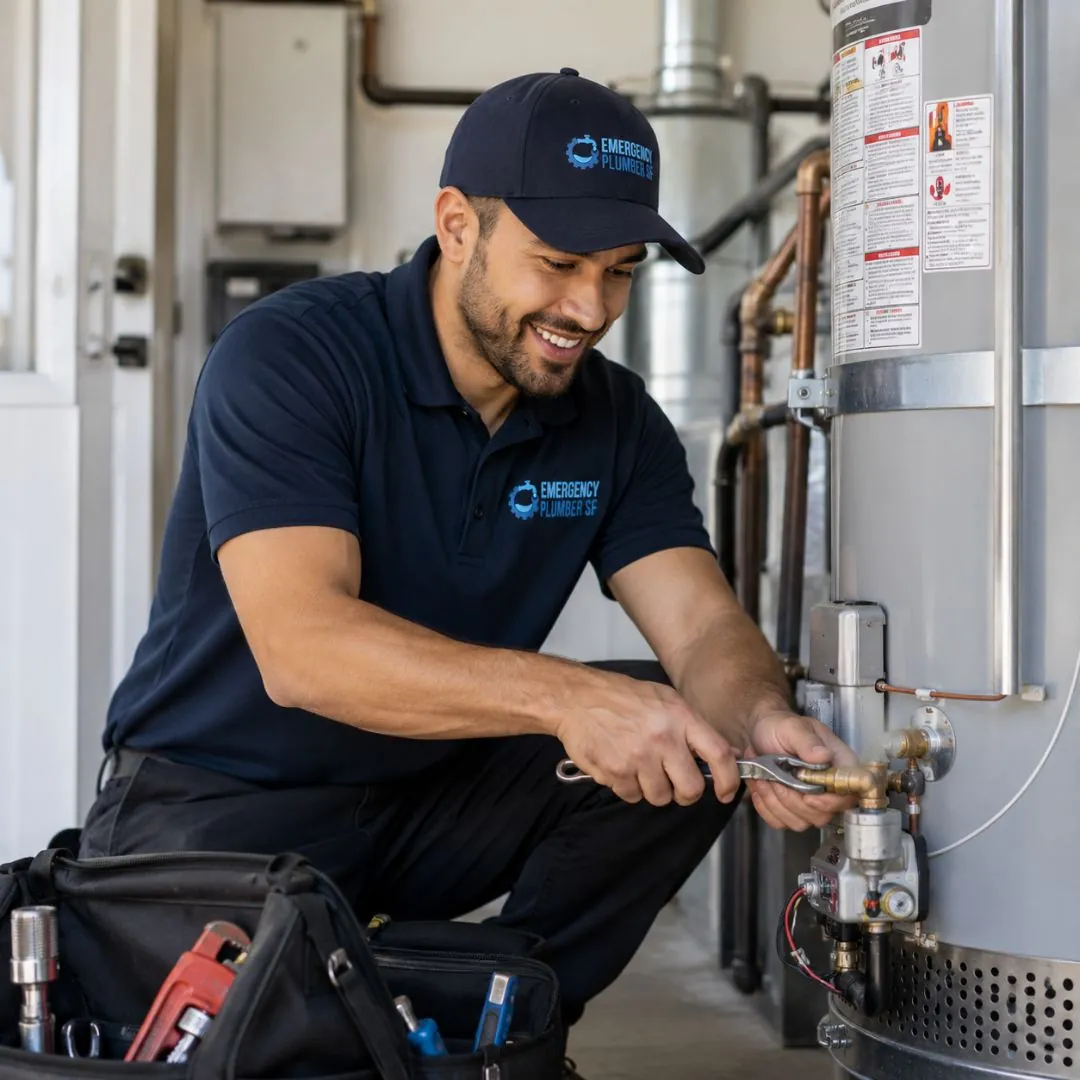
Drains clog for many reasons: grease, hair, soap buildup, wipes, food waste, roots, scale, pipe damage, or poor slope. We choose the method based on the drain, the symptoms, and how the system responds during clearing, not a one-size-fits-all approach.
Grease, food debris, and buildup slow or stop kitchen drains. We clear the line fully and share habits that keep it clear.
Hair, soap, and product buildup block sinks, tubs, and showers. We clear the drain and test flow before we leave.
We handle toilet clogs caused by paper, foreign objects, deeper branch line issues, or repeated backup patterns.
Laundry rooms, garages, basements, and utility areas back up when floor drains or their connected lines are restricted.
When multiple fixtures are affected at once, rooter service is usually needed to clear a deeper blockage in the main line.
These are different tools for different problems, and being sold the expensive one for a job the cheap one handles is the most common complaint in this part of the trade.
Cabling, also called snaking or rootering, feeds a rotating steel cable down the line with a cutting head on the end. It punches through the blockage and cuts roots, and it is fast, cheap, and right for most single-fixture problems. Its limitation is that it clears a channel through the obstruction rather than cleaning the pipe wall, so grease and scale coating the inside are largely left behind.
Hydro jetting uses high-pressure water through a specialised nozzle to scour the full internal diameter. It genuinely cleans rather than perforates, which is why it works on grease in a kitchen line where cabling gives only temporary relief. It costs more and takes longer, and it is not appropriate for every pipe.
| Cabling | Hydro jetting | |
|---|---|---|
| Best for | Single fixture blockages, root cutting, quick clearing | Grease build-up, scale, full-line cleaning, recurring blockages |
| What it does | Opens a channel through the obstruction | Scours the whole pipe wall |
| Typical cost | $250 to $700 | $500 to $1,200 |
| Old or fragile pipe | Generally safe | Needs a camera inspection first |
| How long it lasts | Months, if the underlying cause remains | Considerably longer on grease and scale |
That last row about fragile pipe matters in this city. Plenty of older buildings still have original clay or deteriorated cast iron laterals, and jetting at full pressure through a cracked clay line can make the damage worse. Any reputable firm cameras the line before jetting an older system, and one that proposes jetting without looking first is not being careful with your pipework.
The more important point is why it blocked. A line that blocks annually has a cause: roots entering through a crack, a belly where settlement has created a low spot that collects waste, or heavy scale in old cast iron. Clearing treats the symptom. A camera run after clearing costs a few hundred dollars and tells you whether you are looking at an annual call-out forever or a one-time repair.
| Service | Typical Range | Average |
|---|---|---|
| Simple sink or tub clog | $150–$350 | $245 |
| Toilet or branch drain clog | $175–$450 | $300 |
| Main line rooter service | $300–$900 | $575 |
| Camera inspection add-on | $250–$600 | $425 |
Pricing depends on access, drain location, severity, and whether the clog is recurring. If a camera inspection is worth doing, we'll explain why before recommending it.

We don't just make the water move once. We look for signs of a deeper or recurring restriction and tell you what we find.
Different drains need different methods. Our technicians match the equipment to the line instead of forcing one approach.
Drain work can be messy, so we protect the work area and leave it as clean as we found it.
If a sewer line or damaged pipe may be involved, we show you what we see and explain what to check next. No scare tactics.
Cabling for a single blocked fixture, for cutting roots, and for getting flow back quickly. Jetting for grease build-up, heavy scale, and any line that keeps blocking despite being cabled. If you have been cabled twice in a year, cabling a third time is treating the symptom. Ask for a camera inspection before agreeing to jetting on an older building.
It can, which is why the camera comes first. Original clay laterals with separated joints, and cast iron that has scaled and thinned, do not always tolerate full pressure. A careful operator inspects, then either reduces pressure or recommends repair instead. A firm that quotes jetting on an old San Francisco building without looking inside the line is cutting a corner that could cost you a lateral.
A healthy system should not need scheduled cleaning at all. If yours does, that is information rather than a maintenance need: something is wrong with the line. Buildings with known root intrusion sometimes run an annual clearing as a deliberate holding strategy while saving for the repair, and that is a reasonable choice as long as it is a choice.
Different material. Kitchen lines block with grease, which cools and solidifies on the pipe wall and gradually narrows the bore, so jetting works better than cabling. Bathroom lines block with hair and soap, which form a mass that cabling pulls through effectively. Knowing which you have points to the right tool before anyone quotes.
On a recurring blockage, almost always. It costs a few hundred dollars and answers whether you have roots, a belly, scale, or a collapse, which is the difference between an annual call-out forever and a one-time repair. On a first-time blockage in a single fixture it is usually unnecessary. Ask for the footage, not just a verbal summary.
For a single slow fixture, a plunger and a hand auger are worth trying and often work. Avoid caustic drain chemicals: they frequently fail on a real blockage, can damage older pipework, and create a hazard for whoever opens the line afterward. If you have already used one, say so when you call, because it changes how the job is approached.
Yes, and it is more urgent. Multiple fixtures backing up, or a toilet gurgling when the washing machine drains, means the problem is in the main line or the lateral rather than at one fixture. Stop running water anywhere in the building and get it looked at, because everything you run adds to what comes back up.
Commercial kitchens generate far more grease and usually have a grease interceptor that requires regular pumping and record-keeping. Jetting is the standard approach for the lines themselves, often on a scheduled basis. Access and timing matter as much as the work, so the scheduling conversation should happen on the first call rather than on the day.
For drain cleaning in San Francisco, call Emergency Plumber SF before the backup gets worse.
Quick, simple, and no obligation

We ask which fixtures are affected, when the issue started, and whether backups have happened before.
The technician identifies the best cleanout, trap, fixture, or drain access point.
We use the right drain cleaning method to break through and fully remove the blockage.
We run water, flush fixtures, and confirm the drain is moving properly before wrapping up.